
Phone: 087 - 795 1268
My Training Approach
I use what's known as a balanced reward based dog training system. This means I use a combination of reward-based methods and clear, consistent communication to help a dog understand what's expected of them, not just what earns a reward, but also what doesn't. Reward-only training focuses on reinforcing good behaviour and simply ignoring or redirecting away from unwanted behaviour. Balanced training takes a broader view: dogs, like people, learn fastest and most reliably when there are clear, consistent boundaries alongside the rewards. That means a dog understands not only "yes, that's right" but also "no, try something else", giving them clarity rather than guesswork.
This isn't about one method being harsh and the other being soft. It's about using the right tool and the right communication for the right dog, at the right stage of learning. Every dog is different, some respond beautifully to reward alone, others need clearer structure to feel secure and confident. With decades of experience across breeds, ages and temperaments, I tailor the approach to what actually works for your dog and your family, rather than applying a single method to every dog that comes through the door.
The goal is always the same: a well-adjusted, happy dog who understands the world around them, and an owner who feels confident and in control.
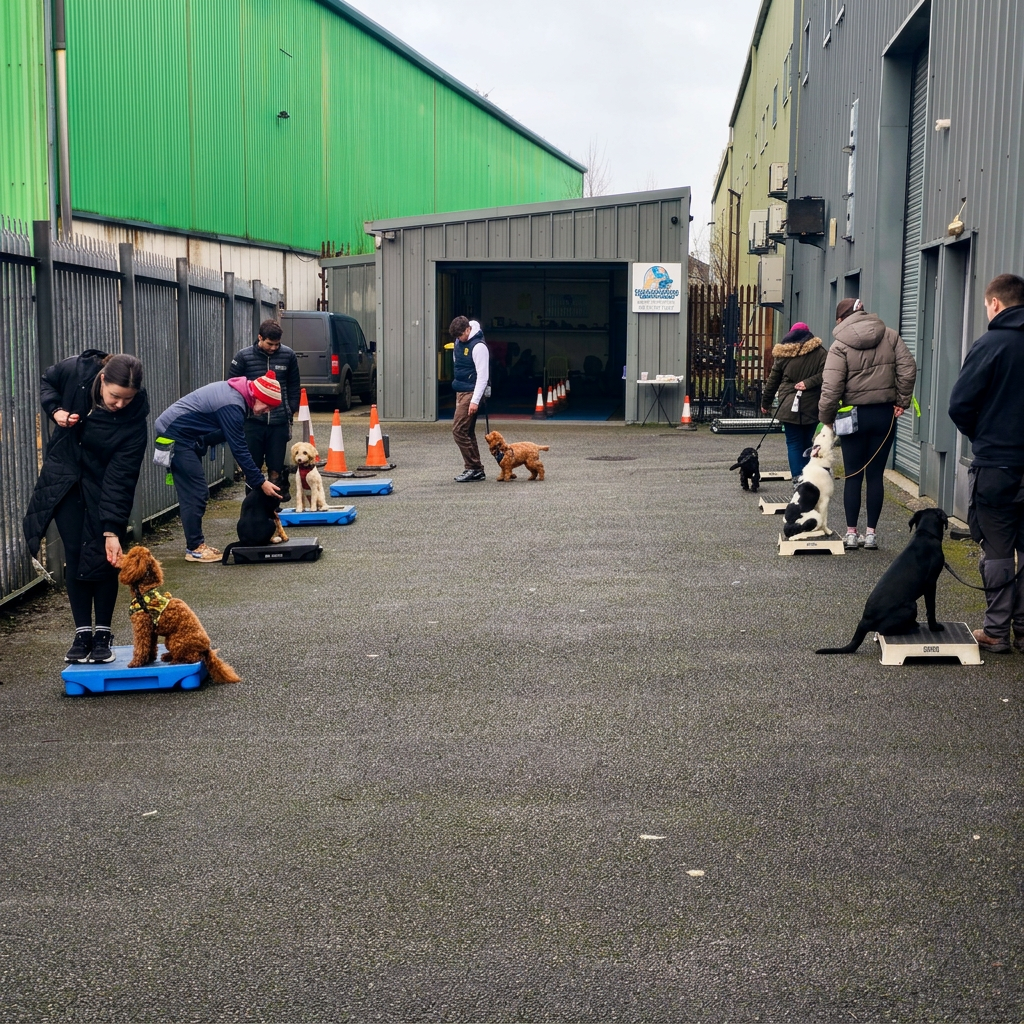
Why Choose a Balanced reward based Training System.
You may have come across trainers who insist that anything beyond reward-only, treat-based training is harsh or outdated. In my experience, this narrow approach often leaves owners stuck: dogs that only behave when there's a treat in hand, and problem behaviours that never fully resolve.
Many of the owners I work with have already tried reward-only training elsewhere and found it simply didn't hold up in real life, around distractions, other dogs, or once the treats run out. That's not a failure on their part, or their dog's. It just means the method didn't fit the dog in front of them.
Balanced reward based training system gives dogs clarity as well as reward, a fuller, more honest form of communication that produces results that last, in the real world, not just in a quiet room with a pocket full of treats.